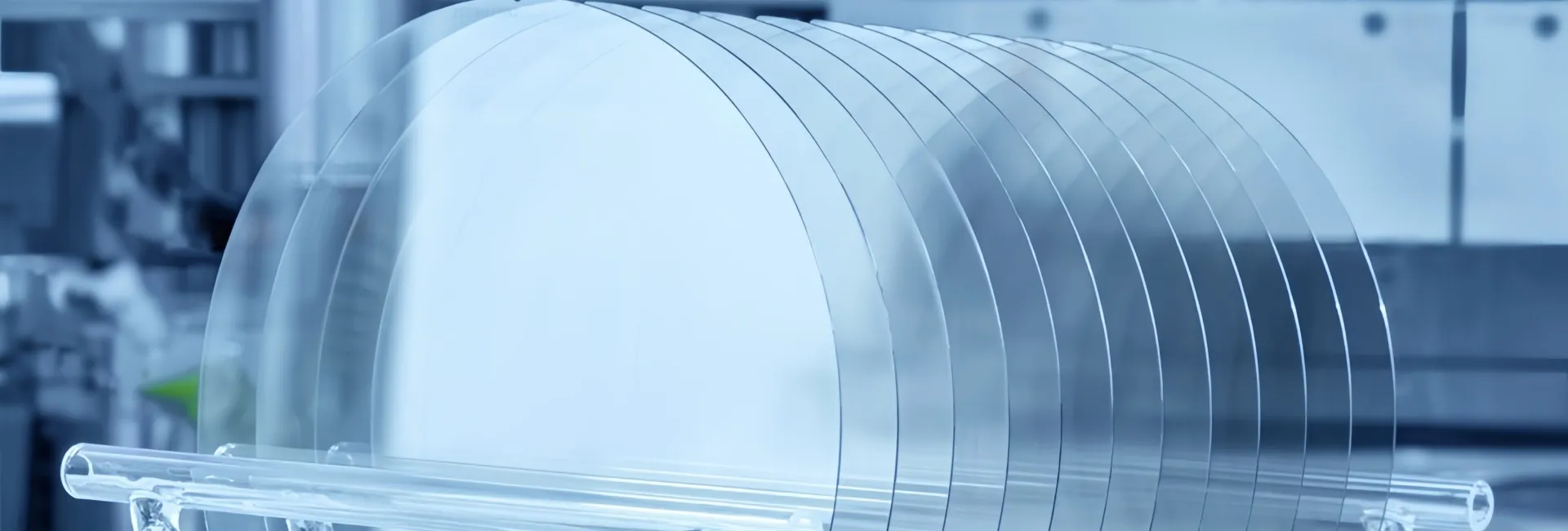

The Ultimate Metric of Crystal Perfection When evaluating sapphire substrates for advanced semiconductor or high-power optical applications, macroscopic inspections (like checking for cracks or bubbl…
Introduction: The Paradox of a Mohs 9 Crystal Sapphire boasts a Mohs hardness of 9, making it one of the hardest materials on Earth, second only to diamond. Yet, any production manager handling sapph…
To the naked eye, the sapphire window looks absolutely flawless. But the moment you power up your high-wattage laser, the crystal catastrophically shatters. Why does this happen? For optical engineer…
In today’s advanced technology landscape, the sapphire wafer is much more than a component; it is the foundation of modern innovation. Thanks to its exceptional light transmission, diamond-like hardn…
As an epitaxy engineer working with LED or high-electron-mobility transistor (HEMT) production, you know that achieving a flawless Gallium Nitride (GaN) layer is an unforgiving process. When your GaN…
In the highly demanding fields of optoelectronics, high-power lasers, and advanced microelectronics, sapphire crystal quality is non-negotiable. Whether used as a substrate for GaN epitaxy or as a du…
The Evolution of Synthetic Sapphire and the KY Method Synthetic sapphire—often referred to as industrial sapphire or single crystal alumina—is a foundational material driving innovation in modern hig…
Synthetic sapphire crystals are very important today. They are core materials for LEDs and high-end optics. So, how to produce sapphire? The industry recognizes the Kyropoulos method as the best appr…
The Invisible Masterpiece: How a Sapphire Watch Case is Made Imagine a watch where the metal case completely vanishes. The complex mechanical movement seems to float on your wrist. This is the “…