
Introduction: The Paradox of a Mohs 9 Crystal
Sapphire boasts a Mohs hardness of 9, making it one of the hardest materials on Earth, second only to diamond. Yet, any production manager handling sapphire wafers knows the frustrating truth: hardness does not equal toughness. Sapphire is exceptionally brittle.
Processing sapphire is a high-stakes battle between extreme hardness and extreme brittleness. Every step—from removing the boule from the furnace to the final chemical mechanical polish—carries the risk of catastrophic fracturing. If your facility is consistently losing yield and money to shattered wafers, the problem likely stems from mechanical machining defects.
In this guide, we will dissect the three most destructive mechanical flaws in sapphire manufacturing and how to prevent them.
Want to understand the difference between internal and mechanical defects? Check out our foundational guide: [Sapphire Wafer Defects: The Ultimate Guide]
1. Sapphire Boule Cracking
Before a single wafer is sliced, the entire production run can be jeopardized by structural failures within the raw ingot itself.
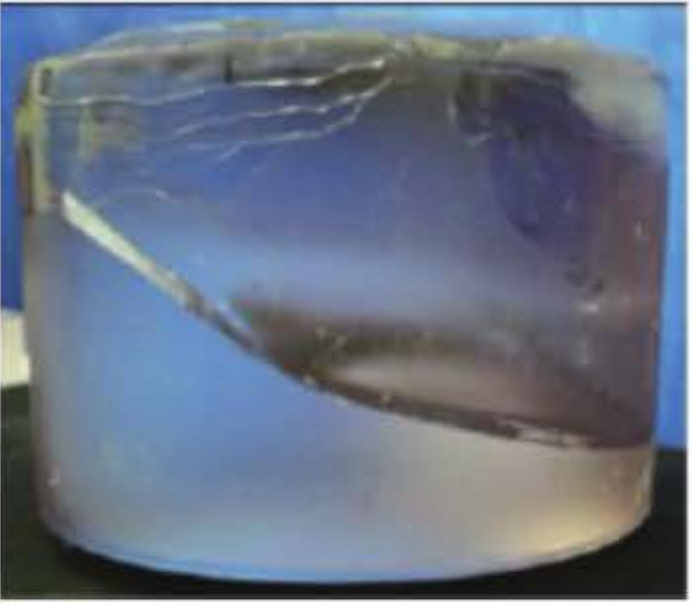
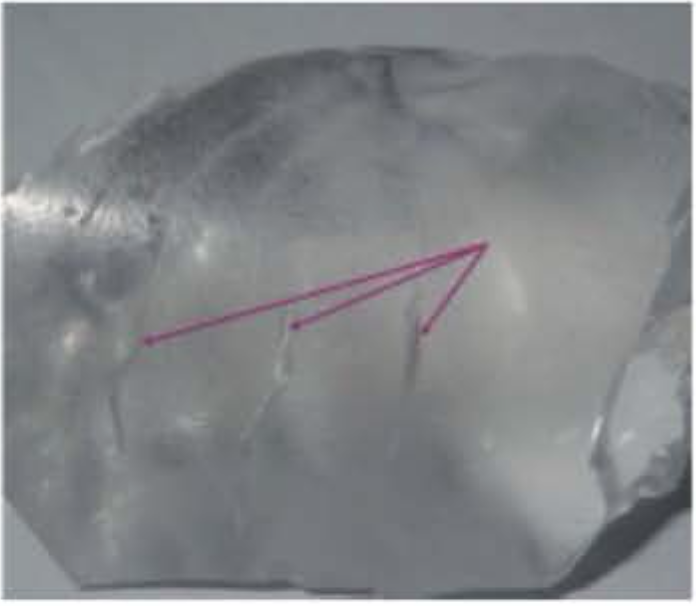
The Defect: Cracking refers to macroscopic fractures that occur internally or along the sidewalls of the sapphire boule.
The Root Cause: While it might seem like a mechanical failure, boule cracking is primarily a thermodynamic issue. It is triggered by:
Thermal Field Configuration: An uneven temperature gradient during the cooling phase generates massive internal stress. When this stress exceeds the material’s tensile strength, it shatters.
Localized Polycrystallization: If impurities gather during growth, the crystal structure can shift from a single crystal to a weaker polycrystalline state, creating natural fault lines.
Crucible Adhesion: If the growing crystal adheres to the sides of the crucible, the differing thermal expansion rates will place intense external compressive stress on the boule as it cools, literally tearing it apart.
2. Diamond Wire Cutting Marks
Once a healthy boule is secured, it must be sliced into thin wafers. This is typically done using diamond wire saws—a violent process that can deeply scar the crystal.
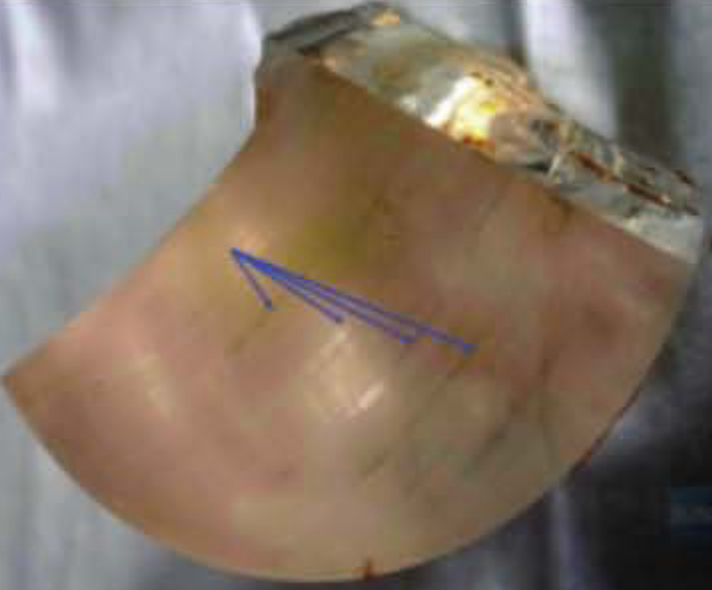
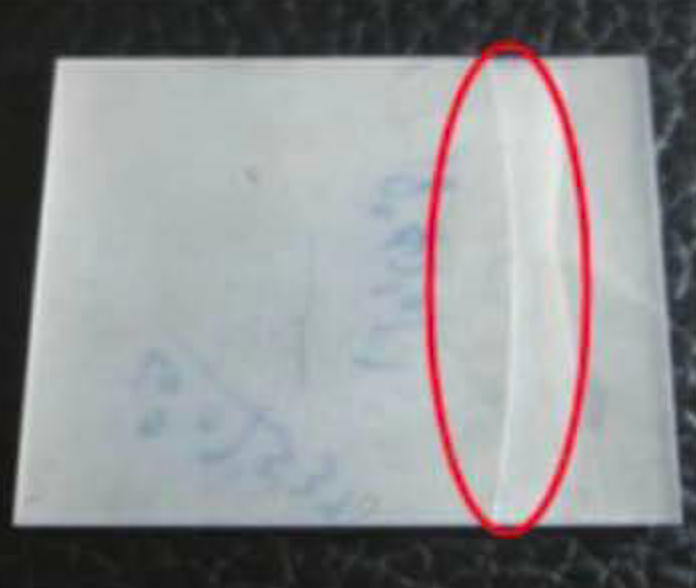
The Defect: Cutting Marks appear as a series of alternating concave and convex arc-shaped or linear grooves left on the surface of the crystal.
The Root Cause: These marks are the direct physical tracks of a poorly controlled slicing process. They are generated by:
Tool Wobble (Oscillation): If the diamond wire saw vibrates or deviates from its strict cutting plane, it gouges into the material.
Uneven Cutting Speed: Fluctuations in the feed rate or wire speed cause the abrasive diamond grit to dig unevenly into the crystal.
The Consequence: Deep diamond wire cutting marks create severe sub-surface damage (SSD). To fix this, your production line must spend significantly more time and consumables in the lapping stage to grind the wafer flat, driving up your manufacturing costs.
3. Wafer Chipping
Perhaps the most common and frustrating mechanical defect is the dreaded edge chip. A single chip can turn a premium wafer into scrap instantly.
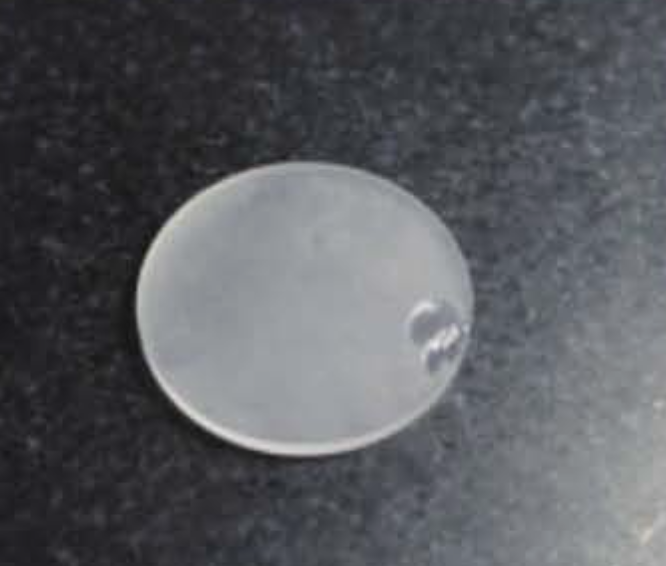
The Defect: Chip / Chipping is localized breakage or fracturing that occurs on a single side of the edge of the crystal ingot or wafer. At the site of the chip, the transparent internal layers of the crystal are often exposed.
The Root Cause: Sapphire wafer chipping happens relentlessly during slicing, lapping, polishing, and even cleaning. It is caused by:
Edge Stress Release: The sharp 90-degree edge of a newly sliced wafer acts as a massive stress concentrator. Even the slightest vibration can cause this stored energy to release, resulting in a fracture.
Mechanical Impact: Human error during packaging or harsh agitation in ultrasonic cleaning tanks can easily chip the fragile edges.
The Danger: A small edge chip isn’t just a cosmetic flaw. During high-temperature epitaxial growth (like GaN deposition), thermal stress will concentrate at the site of the chip, often causing the entire wafer to split in half inside the MOCVD reactor.
Secure Your Yield with Precision Machined Sapphire
You cannot afford to feed your production lines with poorly machined substrates. The cost of a shattered wafer inside an epitaxial reactor far outweighs the initial price of the substrate itself.
Our Commitment to Mechanical Perfection: We don’t just grow high-quality boules; we master the machining process. Every wafer we supply comes standard with:
High-Precision Sapphire Edge Rounding (Bevelling): We mechanically round the edges of our wafers immediately after slicing to eliminate stress concentrators, virtually eradicating edge chipping.
Optimized Diamond Slicing: Strict tension and speed controls ensure minimal cutting marks and shallow SSD.
Full-Process Shock Protection: From lapping to cleanroom packaging, our wafers are handled with rigorous anti-impact protocols.
Related Readings
Sapphire Wafer Manufacturing: From Crystal to Flawless Substrate
How Surface Defects Affect GaN Epitaxy on Sapphire
Machining Sapphire Wafer: Preventing Cracks & Chipping
Optical Sapphire Quality: Managing Bubbles, Scattering, and Internal Stress
Sapphire Crystal Defects & Processing Technical Series
Rooted in authoritative semiconductor materials standards, this series provides cross-border technical insights. Encountering yields bottlenecks in crystal growth, slicing, CMP polishing, or epitaxy? Contact our technical team today. We continuously answer your inquiries and update this expert atlas.
Consult Our Materials Experts