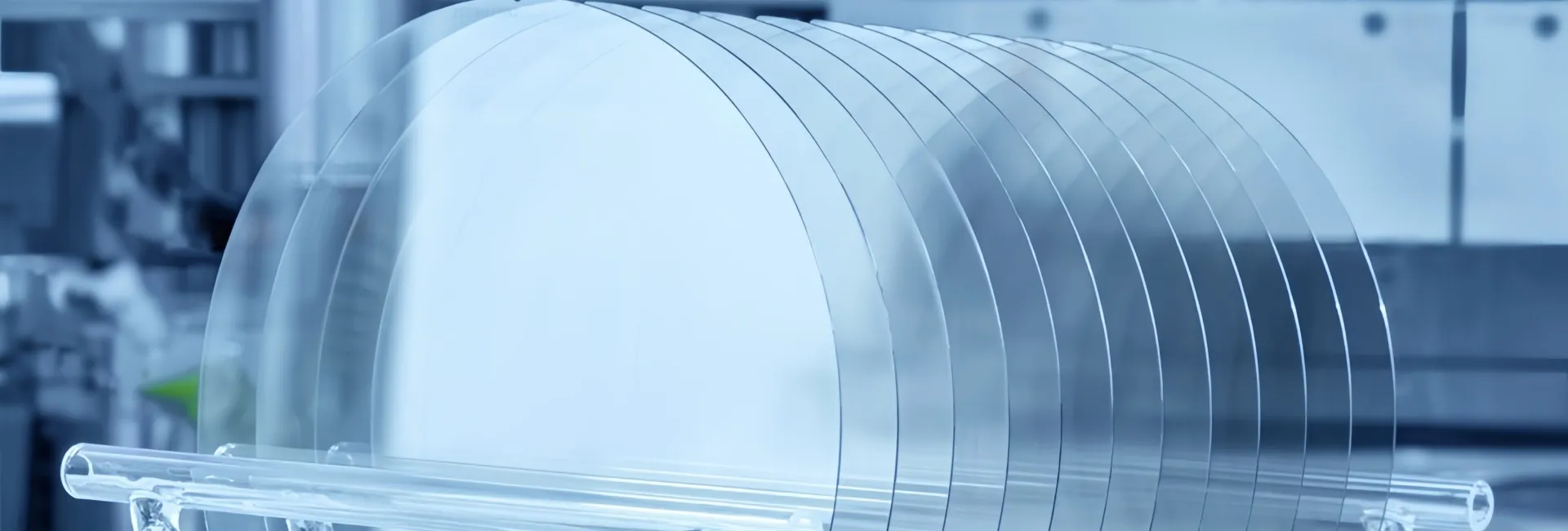

Synthetic sapphire crystals are very important today. They are core materials for LEDs and high-end optics. So, how to produce sapphire? The industry recognizes the Kyropoulos method as the best appr…
The Invisible Masterpiece: How a Sapphire Watch Case is Made Imagine a watch where the metal case completely vanishes. The complex mechanical movement seems to float on your wrist. This is the “…
In the world of semiconductor manufacturing, the smallest particle can cause the biggest problem. This is especially true for large-format 12-inch (300mm) sapphire wafers. As we scale up from 4-inch …
In the semiconductor industry, packaging evolves with technology. For decades, 6 inch and 8 inch wafers were the standard. Manufacturers used open cassettes and storage boxes to ship them. However, t…
Procurement Perspective on Sapphire Wafers For procurement professionals in semiconductor, LED, or optoelectronic manufacturing, selecting the right sapphire wafer is critical. While single-side poli…
As augmented reality (AR) hardware accelerates toward mass adoption, one of the biggest hurdles remains: how to deliver lightweight, high-performance smart glasses with excellent optical quality and …
The semiconductor industry is entering an era where device geometries continue to shrink and manufacturing complexity increases. In this environment, wafer cleaning has become one of the most critica…
In high-performance semiconductor and optoelectronic manufacturing, sapphire wafers are widely used for LEDs, RF devices, sensors, and other advanced components. While single-side polished (SSP) wafe…
In the semiconductor industry, the geometrical quality of thin wafers plays a vital role in device performance. When evaluating substrates — whether silicon, sapphire, or other materials — technical …