
The Invisible Masterpiece: How a Sapphire Watch Case is Made
Imagine a watch where the metal case completely vanishes. The complex mechanical movement seems to float on your wrist. This is the “all-sapphire watch,” a massive trend in high-end watchmaking.
Wearing one is incredibly cool. But they are very rare, and the price tag is usually shocking. Why are they so expensive? And why is it so hard to make one? Let’s uncover the journey of a sapphire watch case.
Step 1: “Growing” Instead of Mining
To make a sapphire case, you don’t dig a stone out of the ground. You “grow” a perfect crystal in a lab.
Engineers heat high-purity aluminum oxide powder to over 2,000°C. Top manufacturers use an advanced technique called the KY Method (Kyropoulos method).
Think of it like slowly freezing a giant, flawless block of ice in a tightly controlled oven. Sapphire grown this way has a highly stable internal structure. It has zero micro-cracks, meaning it won’t easily break later on.
Step 2: Carving with Diamonds
After weeks of slow growth, you get a solid block of sapphire. Next comes the hardest part: carving.
Sapphire has a hardness of 9 on the Mohs scale. In nature, only a diamond is harder. Normal steel tools would be destroyed instantly. So, engineers must use special tools covered in real diamonds.
They use an expensive machine called a 5-Axis CNC. Imagine a super-robot with a highly flexible arm. It can cut the sapphire from five different directions with microscopic precision. It slowly hollows out the hard block to create the curves of the watch case.
The Big Challenge: Why is the Yield Rate So Low?
This is the main reason sapphire watches cost so much. The “yield rate”—the percentage of cases that actually survive the manufacturing process—is famously low.
Even though sapphire is incredibly hard to scratch, it is also highly brittle. It does not bend; it shatters.
During the CNC machining, the diamond drills create intense heat and vibration. If the machine moves a fraction of a millimeter too fast, or if the temperature changes too quickly, the entire sapphire block will crack. When this happens, weeks of work and expensive materials are instantly ruined. A huge number of cases end up in the trash before one is successfully carved.
Step 3: The Magic Polish
When a successful case finally comes out of the CNC machine, it is rough. It looks like white, frosted glass. You cannot see through it at all.
To make it “invisible,” it needs a magic touch: polishing. Workers use special diamond pastes to polish the case for hundreds of hours. They must polish every tiny corner, both inside and out.
Slowly, the frosted look fades away. The case becomes as clear and pure as a drop of water. Finally, factories apply an AR (Anti-Reflective) Coating so you can read the time perfectly under any light.
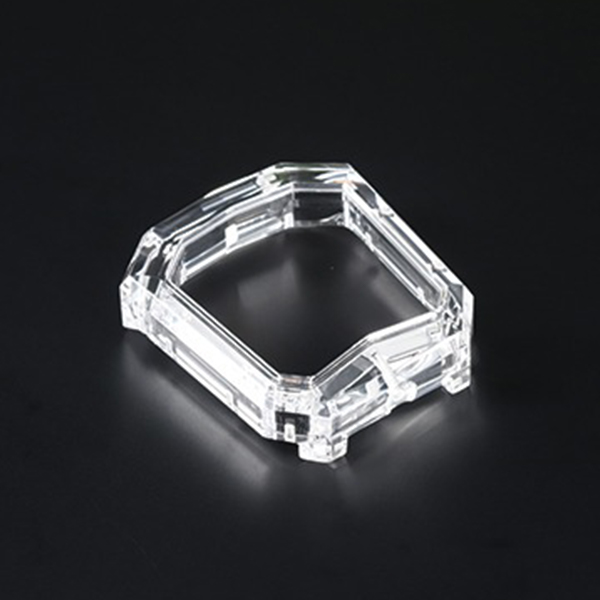
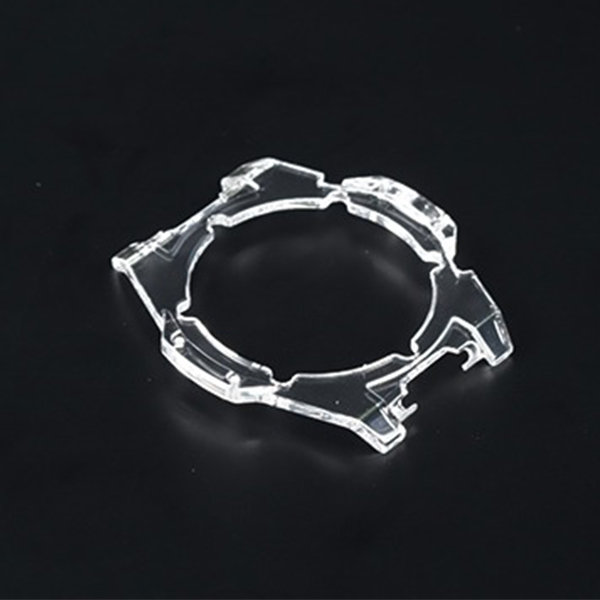
Art Meets Science
Now you know why a sapphire watch is a true luxury. It is not just transparent glass. From 2,000-degree crystal growth to dangerous diamond carving and hundreds of hours of hand-polishing. Every sapphire case is a victory of science and art.
Contact us
If you have requirements for custom sapphire watch cases, please contact us!
We are a professional manufacturing factory with 30 years of experience in sapphire processing.